


Introduction to Biomarkers in Immunology and Disease Monitoring
Biomarkers are measurable biological indicators that provide valuable information about the physiological or pathological state of an organism. In modern medicine, biomarkers are widely used to evaluate health conditions, predict disease risk, monitor disease progression, and assess treatment responses. They may consist of proteins, nucleic acids, metabolites, antibodies, cellular components, or measurable physiological parameters that reflect underlying biological processes.
A biomarker can reveal essential clinical information, including:
- The current biological condition of an individual
- Susceptibility to disease development
- Early disease diagnosis
- Disease severity and progression
- Selection of appropriate therapeutic strategies
- Monitoring of therapeutic efficacy
- Evaluation of clinical outcomes and treatment endpoints
The major advantage of biomarkers lies in their ability to simplify highly complex biological systems into accessible and clinically useful indicators. Biological organisms operate through intricate networks involving genes, proteins, signaling pathways, immune responses, metabolic reactions, and cellular interactions. Biomarkers act as condensed representations of these complex systems.
For example, elevated levels of low-density lipoprotein (LDL) cholesterol can indicate disturbances in lipid metabolism, vascular inflammation, genetic predisposition, dietary imbalance, and increased cardiovascular risk. Instead of analyzing every molecular pathway individually, clinicians can rely on specific biomarkers to rapidly evaluate disease risk and implement preventive interventions.
Because biomarkers summarize large amounts of biological information into measurable parameters, they play a critical role in preventive medicine, personalized therapy, precision diagnostics, and long-term disease management.
The Immune System as a Biological Health-Maintenance Network
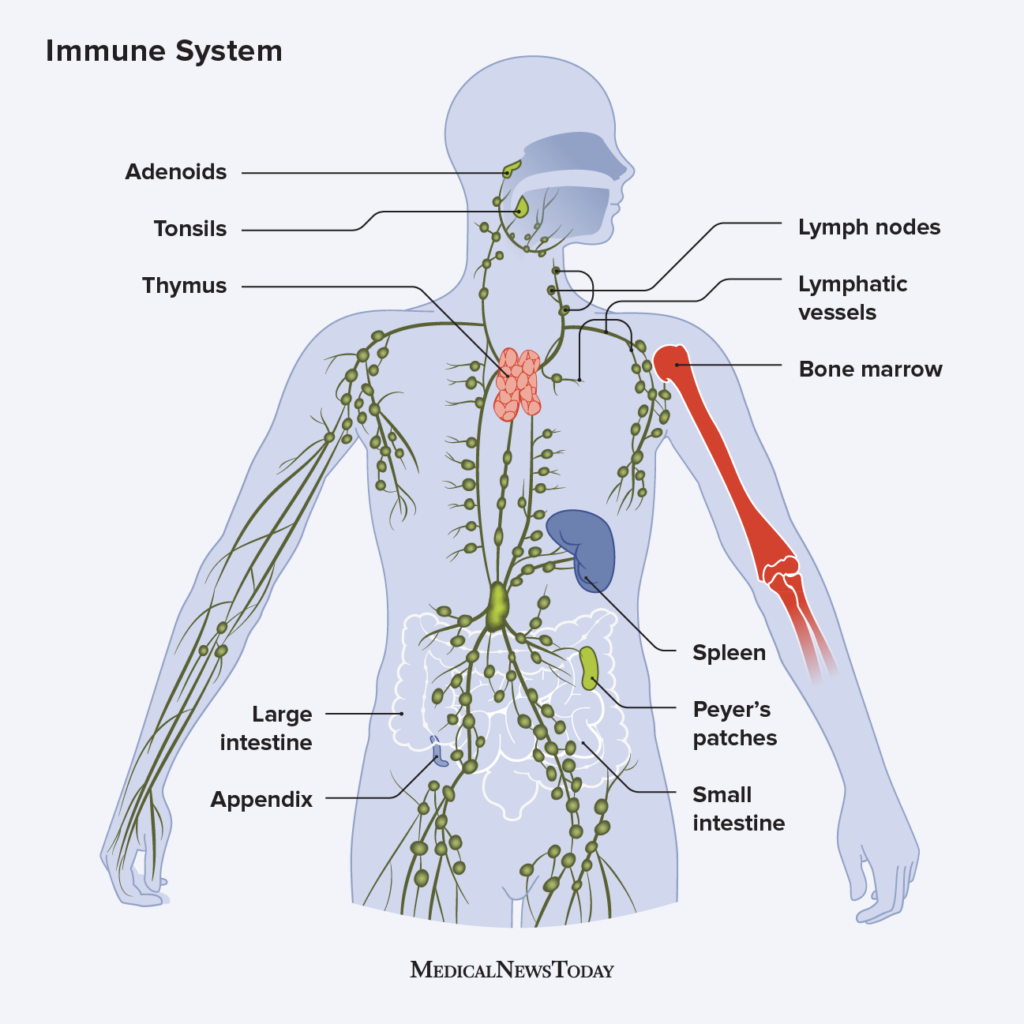
The immune system functions not only as a defense mechanism against pathogens but also as a highly sophisticated biological health-maintenance system. Both innate and adaptive immune responses contribute to preserving tissue integrity and physiological homeostasis.
One of the primary physiological functions of the immune system is the regulation and coordination of inflammation. Inflammation is traditionally defined as the biological response activated after tissue injury or infection to promote healing and restore normal function.
Properly regulated inflammatory responses contribute to numerous essential biological processes, including:
- Elimination of pathogens
- Tissue repair and wound healing
- Angiogenesis and vascular remodeling
- Removal of damaged or senescent cells through apoptosis
- Clearance of metabolic waste and abnormal molecular aggregates
- Maintenance of connective tissue architecture
- Regeneration of injured tissues and organs
These mechanisms continuously protect the organism from environmental stress, microbial invasion, toxic accumulation, metabolic imbalance, and cellular degeneration.
When inflammation is precisely controlled, it supports immune homeostasis and tissue recovery. However, dysregulated or excessive inflammation can become pathogenic and contribute to chronic inflammatory disorders, autoimmune diseases, and tissue destruction. Consequently, immune regulation is essential for balancing protective immunity with tissue preservation.
Immune Computation and Biological Decision-Making
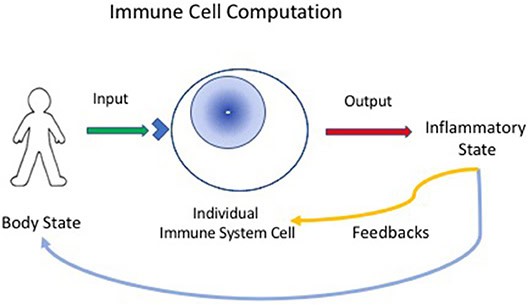
To maintain health effectively, the immune system must constantly collect, interpret, and process biological information from the body. This process resembles a complex computational network capable of evaluating physiological conditions and selecting appropriate immune responses.
The concept of “immune computation” describes how the immune system translates information about the body’s internal state into coordinated inflammatory and regulatory responses. Depending on the detected signals, the immune system can activate different immune programs such as:
- Pro-inflammatory Th1 responses
- Anti-inflammatory Th2 responses
- Tissue regeneration pathways
- Apoptotic mechanisms
- Antimicrobial defenses
- Immune tolerance pathways
These responses must remain dynamic and adaptable throughout the healing process. The immune system continuously modifies its activity according to tissue damage, infection severity, repair progression, and environmental conditions.
Successful immune computation maintains homeostasis and protects tissues. In contrast, defective immune interpretation or abnormal signaling may lead to chronic inflammation, immune dysregulation, or autoimmune pathology.
Biomarkers in Immune Health Maintenance
Because biological systems are extremely complex, the immune system relies on selected informative signals to guide immune responses efficiently. These signals function as immunological biomarkers.
The immune system cannot monitor every molecular event occurring inside the organism simultaneously. Instead, it focuses on specific molecules capable of accurately reflecting tissue status, cellular stress, microbial invasion, or inflammatory activity.
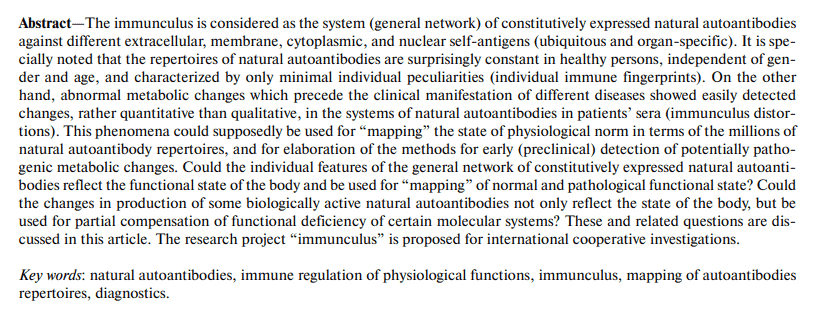
An important theoretical framework proposes that the “immunological homunculus” serves as a natural biomarker network that allows the immune system to recognize essential patterns associated with tissue integrity and physiological balance.
The immunological homunculus refers to the organized repertoire of self-antigens and autoreactive immune components naturally present in healthy individuals. Rather than representing pathological autoimmunity, these self-reactive mechanisms may participate in normal immune surveillance and immune regulation.
Self-Antigens and Physiological Autoimmunity
Classical clonal selection theory originally proposed that healthy immune systems eliminate self-reactive lymphocytes during development to prevent autoimmune disease. According to this model, immune tolerance depends on the deletion or silencing of autoreactive immune cells.
However, modern immunology has demonstrated that physiological autoimmunity is a normal component of immune regulation. The immune system continuously monitors self-molecules and tissue-derived signals to evaluate the biological condition of the host.
Both innate and adaptive immune receptors participate in this surveillance system.
Innate immune receptors such as Toll-like receptors (TLRs) detect:
- Pathogen-associated molecular patterns (PAMPs)
- Damage-associated molecular patterns (DAMPs)
- Endogenous stress molecules released by injured tissues
Adaptive immune receptors, including T-cell receptors and antibodies, also recognize selected self-antigens under physiological conditions.
This continuous recognition of self-components enables the immune system to monitor tissue health, detect stress, and regulate inflammation appropriately.
Therefore, a controlled degree of autoimmunity appears to be physiologically necessary for maintaining immune homeostasis.
The Immunological Homunculus and Natural Autoantibodies
Studies of neonatal cord blood have revealed that healthy individuals naturally possess organized repertoires of autoantibodies directed against specific self-antigens from birth. This congenital immune repertoire is known as the immunological homunculus.
Research using antigen microarray technologies identified natural autoantibodies targeting multiple categories of self-molecules, including:
Tissue-Associated Antigens
- Myelin oligodendrocyte glycoprotein
- Myosin
- Collagen
- Thyroglobulin
- Glutamic acid decarboxylase
Immune Regulatory Molecules
- Interleukins
- Ubiquitin
- Galectins
- Gelsolin
Cellular Stress Proteins
- Heat shock proteins (HSP40, HSP47, HSP60, HSP70)
These molecules may provide critical biomarker information to the immune system regarding tissue location, injury type, cellular stress, and inflammatory status.
For example:
- Tissue-specific antigens can identify the anatomical site requiring immune intervention
- Stress proteins can indicate cellular damage or metabolic stress
- Cytokine-associated molecules can reflect ongoing immune activation
The immunological homunculus therefore functions as an internal biological monitoring system capable of guiding immune decision-making processes.
Functional Advantages of Natural Autoimmunity
Although autoreactive immune responses are associated with autoimmune diseases, physiological autoimmunity may provide several important biological benefits.
Natural autoreactive immune components may contribute to:
Clearance of Cellular Waste
Autoantibodies and autoreactive lymphocytes help eliminate apoptotic cells, damaged proteins, and abnormal molecular accumulations.
Early Antimicrobial Defense
Certain pathogens express molecules structurally similar to self-antigens. Natural autoreactivity may therefore accelerate immune recognition of infectious agents through molecular cross-reactivity.
Immune Regulation
Physiological autoimmunity may generate regulatory immune circuits that suppress excessive inflammation and maintain immune tolerance.
Protection Against Pathogenic Autoimmunity
Natural autoantibodies may block access of pathogenic immune cells to critical self-antigens, reducing tissue damage.
Immune Surveillance and Tissue Monitoring
Self-antigens recognized by the immunological homunculus may serve as biomarkers that continuously inform the immune system about local and systemic tissue conditions.
These functions suggest that natural autoimmunity is not merely an accidental feature of the immune system but rather an evolutionarily conserved mechanism contributing to immune homeostasis.
Clinical Importance of the Immunological Homunculus
The study of natural autoimmunity and biomarker networks may improve modern approaches to personalized medicine and immune-based diagnostics.
Patterns of autoantibody expression may help clinicians:
- Detect early inflammatory changes
- Identify disease susceptibility
- Predict autoimmune progression
- Monitor immune dysregulation
- Select targeted immunotherapies
- Evaluate treatment responses
Because the immunological homunculus reflects the physiological state of the organism, analyzing its molecular patterns could provide valuable insights into both health and disease.
Future advances in systems immunology, biomarker discovery, immune profiling, and precision medicine may allow physicians to use immunological homunculus signatures as diagnostic and prognostic tools for autoimmune diseases, chronic inflammatory disorders, metabolic syndromes, neurodegenerative diseases, and cancer.
Conclusion
Biomarkers represent essential tools for simplifying biological complexity and improving disease diagnosis, monitoring, and treatment. Within the immune system, self-antigens and natural autoreactive networks collectively form an organized surveillance system known as the immunological homunculus.
Rather than existing solely as pathological phenomena, physiological autoimmunity and self-recognition mechanisms appear to play fundamental roles in immune regulation, tissue monitoring, inflammation control, and maintenance of homeostasis.
The immunological homunculus may therefore function as an internal biomarker network that continuously informs the immune system about the biological condition of the body. Understanding these mechanisms could significantly advance immunological research, biomarker-based diagnostics, personalized therapies, and preventive medicine.