

Introduction to Modern Antimicrobial Strategies
Antimicrobial resistance has become one of the most serious global health challenges. Although many antimicrobial drugs have been developed over the years, bacteria, fungi, and viruses continuously evolve resistance mechanisms that reduce the effectiveness of conventional treatments. This rapid development of drug resistance makes infections increasingly difficult to control and significantly complicates clinical management.
The excessive and inappropriate use of antibiotics has accelerated the emergence of multidrug-resistant microorganisms. In recent years, antimicrobial resistance has been associated with millions of deaths worldwide, making it one of the leading causes of mortality. Among the most problematic pathogens is Staphylococcus aureus, particularly methicillin-resistant Staphylococcus aureus (MRSA), which is widely recognized for causing severe hospital-acquired infections. Although S. aureus can naturally colonize the human nasal cavity without symptoms, resistant strains such as MRSA are highly dangerous because they are difficult to eliminate using standard antibiotics.
Fungal pathogens also present major therapeutic challenges. Candida albicans, one of the most common fungal pathogens, is capable of developing resistance to multiple antifungal drugs. Since fungal cells share several structural and physiological similarities with human cells, designing antifungal therapies that selectively destroy fungi without damaging healthy tissues remains highly complex.
In addition to bacterial and fungal resistance, emerging viral pathogens continue to threaten global public health. The appearance of SARS-CoV-2, the virus responsible for COVID-19, demonstrated how rapidly infectious diseases can spread in the absence of effective antiviral therapies. Despite the development of vaccines, COVID-19 continued to cause widespread infections and deaths globally, highlighting the urgent need for innovative antimicrobial technologies capable of targeting a broad range of pathogens.
Limitations of Conventional Antimicrobial Therapies
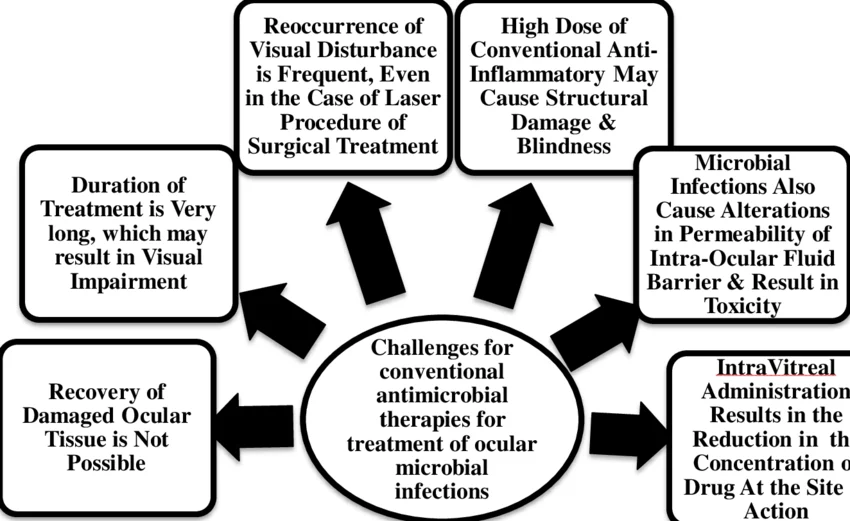
Traditional antimicrobial drug development is extremely time-consuming and expensive. Developing a new therapeutic agent often requires more than a decade of research and testing, while many candidates fail during early development because of toxicity or insufficient effectiveness.
Another major issue with antibiotics is their impact on the normal microbial flora. Broad-spectrum antimicrobial treatments can disrupt beneficial microorganisms in the body, leading to microbial imbalance and secondary infections. Furthermore, even highly effective drugs frequently lose their potency over time due to the rapid emergence of resistant strains.
Because of these limitations, researchers are increasingly focusing on targeted antimicrobial strategies that selectively eliminate harmful pathogens while preserving beneficial microorganisms. Ideally, future antimicrobial technologies should function independently of the pathogen’s resistance profile and should be adaptable to bacterial, fungal, and viral infections.
Development of Photoimmuno-Antimicrobial Strategy (PIAS)
To address these challenges, researchers developed a novel targeted antimicrobial technology known as the Photoimmuno-Antimicrobial Strategy (PIAS). This innovative system was inspired by photoimmunotherapy originally designed for cancer treatment.
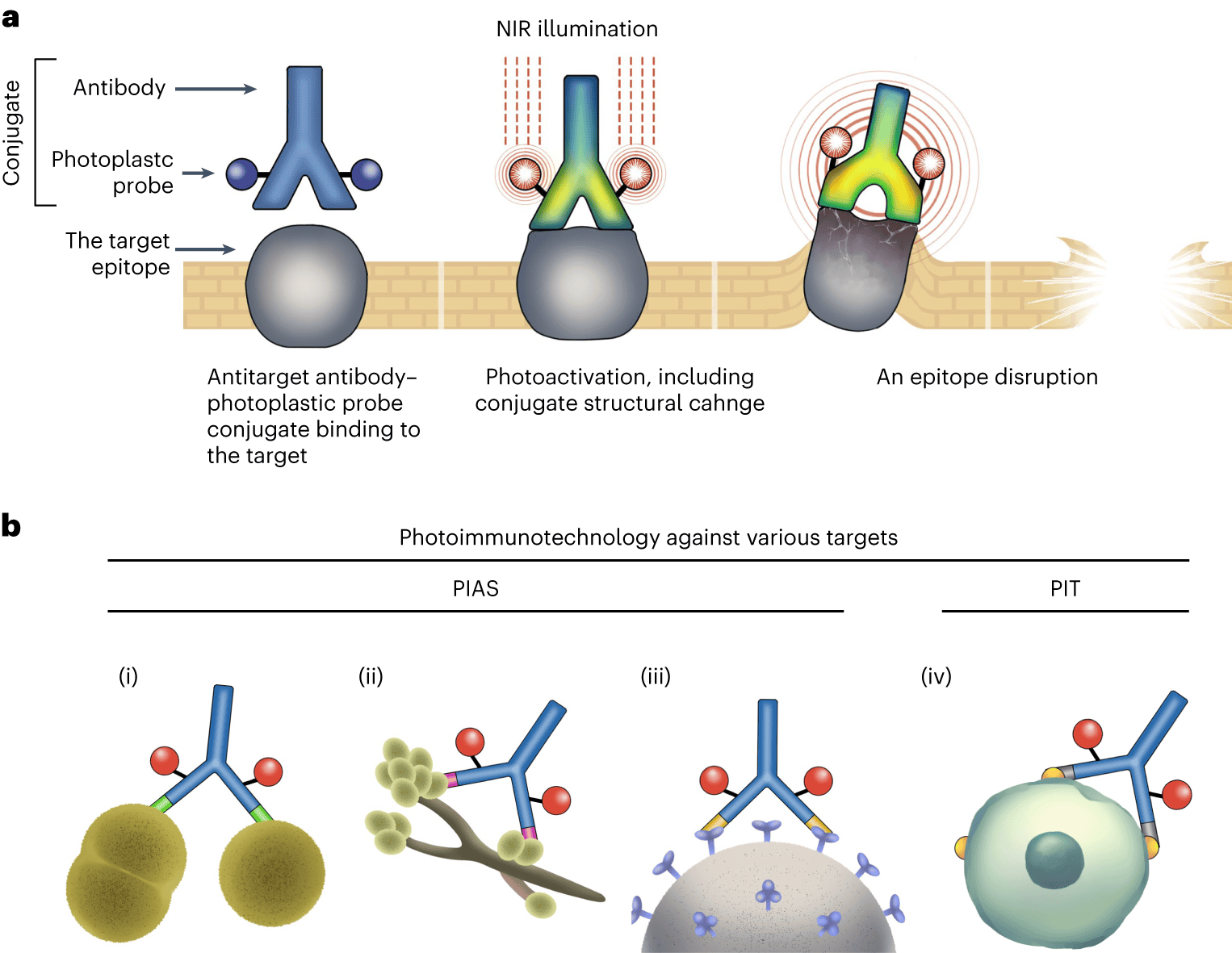
PIAS combines monoclonal antibodies with a photoactivatable dye called IRDye700DX (IR700). The antibodies specifically recognize microbial surface antigens, while the IR700 dye becomes activated after exposure to near-infrared (NIR) light. Once activated, the conjugated complex generates mechanical stress that damages microbial structures and rapidly destroys targeted pathogens.
One of the major advantages of PIAS is its ability to selectively target microbes regardless of their species or antimicrobial resistance status. This technology can therefore be applied against multidrug-resistant bacteria, resistant fungi, and even viral pathogens.
Antibacterial Activity of PIAS Against Staphylococcus aureus
The first major application of PIAS focused on Staphylococcus aureus, including multidrug-resistant MRSA strains. Researchers created a specific antibody-IR700 conjugate that recognizes peptidoglycan structures located in the bacterial cell wall.
After confirming selective binding of the conjugate to bacterial cells, the pathogens were exposed to near-infrared light. The treatment rapidly produced strong bactericidal effects within minutes. Importantly, the antimicrobial activity depended on both the amount of conjugate used and the intensity of NIR illumination.
PIAS successfully eliminated bacterial cells during both exponential growth and stationary phases. This is particularly important because stationary-phase bacteria often contain persister cells that are highly resistant to conventional antibiotics.
The technology also demonstrated effectiveness against bacterial biofilms, which are notoriously difficult to treat using traditional antimicrobial agents. PIAS eliminated a large proportion of bacterial cells embedded within biofilms, suggesting strong potential for treating chronic infections.
Most importantly, PIAS maintained its effectiveness against multiple drug-resistant strains, including MRSA and vancomycin-intermediate S. aureus strains. No significant differences in susceptibility were observed among resistant strains, indicating that antimicrobial resistance mechanisms do not interfere with PIAS activity.
Selective Targeting Without Damaging Normal Microflora
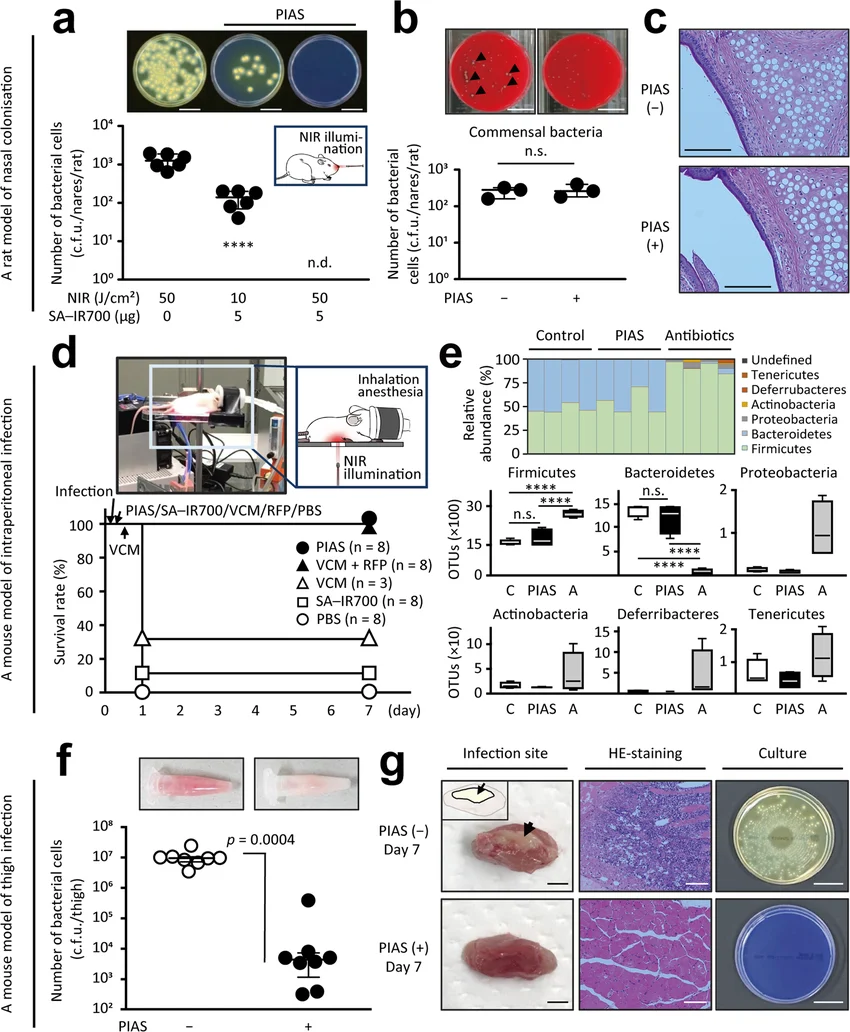
A major benefit of PIAS is its remarkable specificity. Experiments showed that the treatment selectively eliminated pathogenic S. aureus while leaving non-target commensal bacteria such as Staphylococcus epidermidis unaffected.
This specificity results from the antibody-mediated recognition of unique microbial antigens. Unlike broad-spectrum antibiotics, PIAS minimizes disruption of the normal microbiome and reduces the risk of dysbiosis.
Researchers also demonstrated that non-specific antibody conjugates produced little or no antimicrobial activity, confirming that targeted binding is essential for pathogen elimination.
Mechanism of Antimicrobial Action
Unlike traditional antibiotics that interfere with microbial metabolism or replication, PIAS appears to destroy pathogens through a rapid mechanical mechanism induced by photoactivation.
Scanning electron microscopy revealed extensive microbial damage after treatment, while almost no bacterial debris remained. The rapid killing process suggests that PIAS mechanically disrupts microbial structures rather than relying solely on oxidative stress.
Researchers also investigated the role of reactive oxygen species. Although singlet oxygen contributed partially to antimicrobial activity, hydrogen peroxide did not appear to play a major role. Overall, the findings suggest that mechanical stress generated after NIR activation is the primary antimicrobial mechanism.
Because PIAS acts through physical disruption rather than metabolic inhibition, the emergence of resistant strains is considered less likely compared with conventional antibiotics.
Antifungal Effects of PIAS
Researchers extended PIAS technology to fungal pathogens by targeting Candida albicans. A monoclonal antibody recognizing fungal cell wall mannan structures was conjugated with IR700 and activated using near-infrared light.
The treatment demonstrated strong fungicidal activity against both drug-sensitive and drug-resistant fungal strains. Importantly, non-target fungal species were not significantly affected, confirming the specificity of the system.
PIAS was also capable of simultaneously targeting multiple pathogens. When different antibody conjugates were combined, the treatment selectively eliminated both fungal and bacterial pathogens without affecting non-target microorganisms.
Antiviral Activity Against SARS-CoV-2
To evaluate whether PIAS could also target viruses, researchers tested the system against SARS-CoV-2 using antibodies directed against viral spike proteins.
The results showed that PIAS effectively inactivated the virus after near-infrared activation. Viral RNA levels were significantly reduced, and infected cell cultures demonstrated strong protection compared with untreated controls.
Interestingly, some antibodies used in the study had no intrinsic neutralizing activity against the virus. Nevertheless, once conjugated with IR700 and activated by NIR light, they became highly effective antiviral agents. This indicates that PIAS does not rely solely on conventional antibody neutralization mechanisms.
Researchers also demonstrated antiviral activity against bacteriophages, further confirming the broad applicability of the technology across different microbial species.
In Vivo Effectiveness of PIAS
Animal studies confirmed that PIAS remains effective in living organisms. In rat models of MRSA nasal colonization, the treatment eradicated pathogenic bacteria without damaging surrounding tissues or affecting commensal microflora.
Additional studies using mouse models of intraperitoneal and deep tissue infections showed that PIAS successfully eliminated MRSA infections in vivo. Unlike conventional antibiotics, the treatment did not significantly alter intestinal microbiota composition.
These findings highlight the ability of PIAS to provide targeted antimicrobial activity while preserving healthy microbial ecosystems.
Clinical Potential and Future Applications
PIAS represents a promising next-generation antimicrobial platform with several important advantages:
- Highly specific pathogen targeting
- Activity against multidrug-resistant organisms
- Broad applicability to bacteria, fungi, and viruses
- Reduced disruption of normal microbiota
- Lower risk of resistance development
- Rapid antimicrobial action
The technology may also be useful for treating emerging infectious diseases in the future, provided that suitable antibodies are available against the target pathogens.
Clinical applications could include treatment of severe hospital-acquired infections, chronic biofilm-associated infections, resistant fungal diseases, and viral infections. Near-infrared light delivery can be performed externally or through endoscopic systems, allowing treatment of both superficial and deep tissue infections.
Conclusion
The Photoimmuno-Antimicrobial Strategy (PIAS) introduces an innovative and highly targeted approach for eliminating bacterial, fungal, and viral pathogens. By combining monoclonal antibodies with photoactivatable molecules and near-infrared light, PIAS achieves selective microbial destruction independent of conventional antimicrobial resistance mechanisms.
This technology offers a powerful alternative to traditional antibiotics and antifungal therapies while preserving beneficial microorganisms and reducing the risk of resistance development. As antimicrobial resistance continues to rise worldwide, PIAS may become an important platform for the development of future precision antimicrobial therapies.