

Introduction to Host–Microbe Interactions in the Intestinal Environment
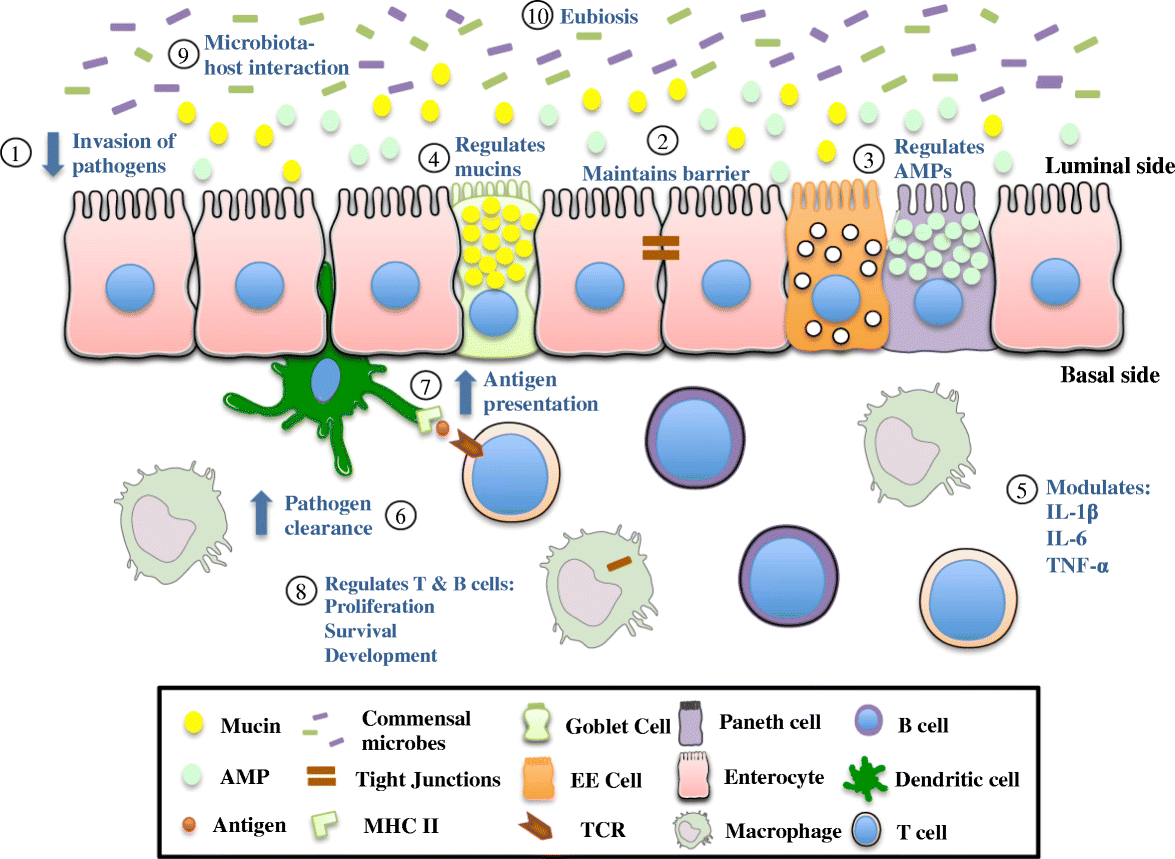
The gastrointestinal tract contains one of the highest concentrations of microorganisms in the human body, creating a highly dynamic environment where continuous communication occurs between intestinal microbes and host immune cells. These interactions are essential for maintaining intestinal health, regulating nutrient metabolism, supporting epithelial barrier integrity, and controlling immune responses. However, disturbances in the balance between host defense mechanisms and microbial tolerance can contribute to the development of chronic inflammatory disorders such as Inflammatory Bowel Disease.
The intestinal immune system performs a dual and highly specialized function. It must protect the host against pathogenic microorganisms and excessive microbial invasion while simultaneously tolerating beneficial resident microbiota. Failure to maintain this immune equilibrium can trigger persistent intestinal inflammation and mucosal damage associated with inflammatory bowel disease.
The composition of intestinal microbiota is highly heterogeneous and influenced by multiple environmental and biological factors, including diet, antibiotic exposure, microbial colonization during early life, infections, and environmental microbial exposure. Different microbial species can exert distinct immunological effects on the host. Some bacteria promote anti-inflammatory immune responses, whereas others stimulate pro-inflammatory pathways and alter the balance between regulatory and effector immune cells.
Research has shown that specific microbial populations can influence the differentiation and activity of regulatory T cells (Tregs), T helper 17 (Th17) cells, and other immune cell subsets involved in intestinal homeostasis. However, the precise contribution of individual bacterial species or defined microbial communities to intestinal inflammation remains incompletely understood.
Contrary to the traditional concept that resident microbiota are completely tolerated while pathogens are selectively targeted, the intestinal immune system continuously monitors commensal microorganisms through constitutively active immune surveillance pathways. Multiple defense mechanisms are permanently engaged to prevent uncontrolled microbial expansion and maintain intestinal immune homeostasis.
These protective mechanisms include:
- Continuous production of antimicrobial peptides by Paneth cells
- Mucus secretion by goblet cells
- Secretory immunoglobulin A (IgA)-mediated neutralization of microbes
- Regulation of microbial attachment to the intestinal epithelium
- Prevention of excessive microbial invasion into intestinal tissues
The distinction between commensal and pathogenic microorganisms is therefore more complex than previously believed. Certain resident microbes can become pathogenic under inflammatory conditions, while some microbial communities actively support immune tolerance and epithelial repair.
Intestinal Immune Defense Mechanisms Against Microbiota
Pattern Recognition Receptors and Microbial Detection
The intestinal immune system relies heavily on pattern recognition receptors (PRRs) to detect microorganisms and initiate antimicrobial defense responses. PRRs recognize conserved microbial structures known as pathogen-associated molecular patterns (PAMPs), which are expressed by bacteria, viruses, fungi, and other microbes.
Major PRR families involved in intestinal immunity include:
- Toll-like receptors (TLRs)
- NOD-like receptors (NLRs)
- C-type lectin receptors
- Retinoic acid-inducible gene-I-like receptors (RLRs)
These receptors are strategically located on the cell surface, within endosomes, or inside the cytoplasm, allowing immune cells to monitor microbes in multiple cellular compartments.
Activation of PRRs initiates several downstream immune pathways, including:
- Cytokine and chemokine secretion
- Activation of NF-κB signaling
- Production of antimicrobial peptides
- Phagocytosis
- Autophagy
- Generation of reactive oxygen species (ROS)
- Activation of adaptive T-cell and B-cell responses
Although many PRRs share overlapping signaling pathways, each receptor can recognize distinct microbial ligands and induce specialized immune responses.
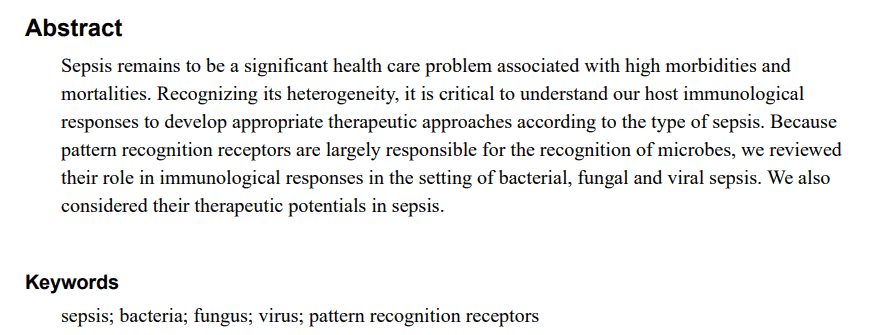
Intestinal Epithelial Cell-Mediated Defense
Role of the Intestinal Epithelium in Immune Protection
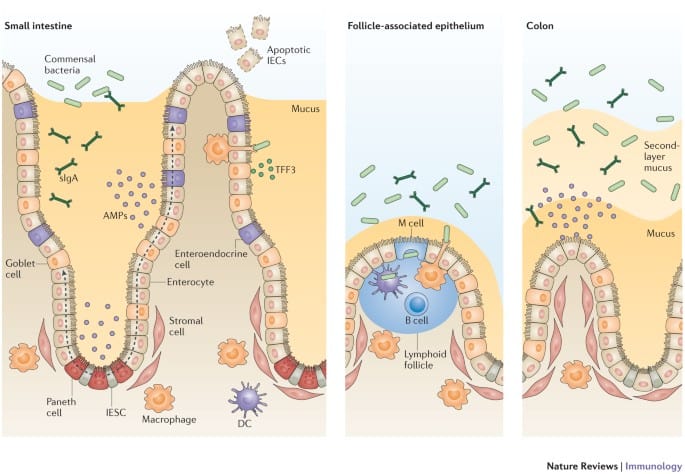
The intestinal epithelium forms a critical physical and immunological barrier between luminal microbiota and host tissues. Beyond its structural role, the epithelium actively participates in immune defense by sensing microbes and producing antimicrobial mediators.
Intestinal epithelial cells (IECs) express multiple PRRs that allow direct recognition of microorganisms. Following microbial stimulation, IECs produce:
- Pro-inflammatory cytokines
- Chemokines
- Antimicrobial proteins
- Immune regulatory molecules
Different epithelial cell lineages contribute to intestinal protection through specialized functions.
Paneth Cells
Paneth cells produce antimicrobial peptides such as:
- Defensins
- Lysozymes
- Lectins
These molecules limit bacterial overgrowth and help regulate microbial composition in the intestinal lumen.
Goblet Cells
Goblet cells secrete:
- Mucins
- Trefoil peptides
- Resistin-like molecule beta (RELMβ)
The mucus layer generated by goblet cells prevents direct microbial contact with epithelial surfaces and reduces microbial penetration into tissues.
Enterocytes
Enterocytes contribute to immune regulation through enzymes capable of detoxifying bacterial products such as lipopolysaccharide (LPS), thereby reducing excessive inflammatory signaling.
Defects in epithelial antimicrobial pathways increase susceptibility to intestinal inflammation and are strongly associated with inflammatory bowel disease pathogenesis.
Cellular Mechanisms of Microbial Killing
Phagocytosis and Reactive Oxygen Species
When microorganisms breach the epithelial barrier, innate immune cells such as macrophages and neutrophils eliminate invading pathogens through phagocytosis and intracellular killing mechanisms.
Intestinal macrophages generate:
- Reactive oxygen species (ROS)
- Reactive nitrogen species (RNS)
These molecules are essential for controlling enteric infections and preventing systemic bacterial dissemination.
Deficiencies in ROS production, such as those observed in chronic granulomatous disease, are associated with increased susceptibility to intestinal inflammation and colitis.
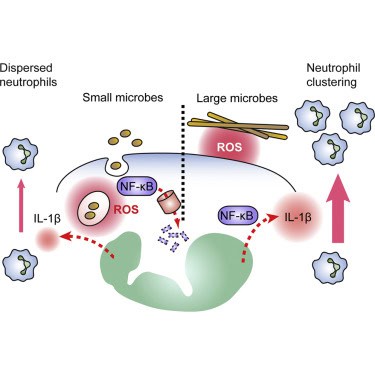
Autophagy and Intestinal Immune Homeostasis
Autophagy is a highly conserved intracellular degradation pathway involved in the removal of:
- Damaged organelles
- Intracellular pathogens
- Protein aggregates
- Apoptotic debris
Genetic studies have identified mutations in autophagy-related genes such as:
- ATG16L1
- IRGM
These variants are strongly associated with Crohn’s Disease and contribute to impaired microbial clearance and abnormal immune responses.
Autophagy also regulates:
- Paneth cell function
- Cytokine secretion
- Antigen presentation
- T-cell selection
Impaired autophagy disrupts intestinal immune homeostasis and promotes chronic intestinal inflammation.
IL-23 and Th17 Pathway in Intestinal Inflammation
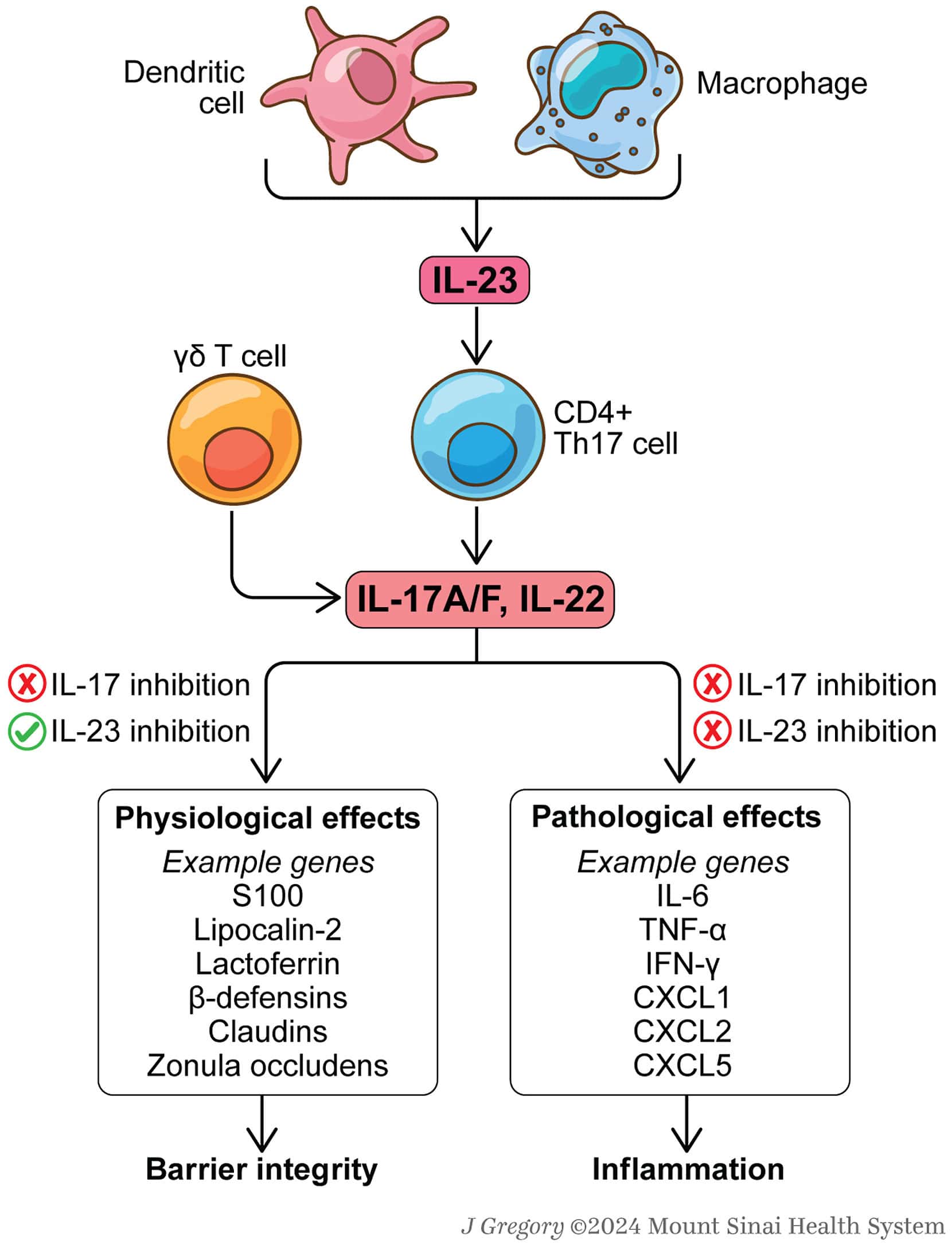
The IL-23/Th17 immune axis plays a central role in mucosal defense against extracellular pathogens. Activation of this pathway promotes the production of inflammatory cytokines such as:
- IL-17
- IL-22
- TNF-α
Although these cytokines contribute to antimicrobial protection, excessive activation of the IL-23/Th17 pathway promotes tissue injury and chronic inflammation in inflammatory bowel disease.
Genetic polymorphisms involving:
- IL23R
- STAT3
- JAK2
- CCR6
- TYK2
have been associated with increased susceptibility to IBD, highlighting the importance of this pathway in intestinal immune regulation.
Intestinal Immune Tolerance Mechanisms
Maintaining Tolerance to Resident Microbiota
The intestinal immune system must avoid excessive inflammatory responses against beneficial resident microbes. Immune tolerance is maintained through coordinated interactions between:
- Intestinal epithelial cells
- Stromal cells
- Dendritic cells
- Regulatory T cells
- Anti-inflammatory cytokines
- Resident microbiota
Regulatory Cytokines
Key anti-inflammatory mediators include:
- IL-10
- Transforming growth factor-beta (TGF-β)
- Retinoic acid
These molecules suppress excessive immune activation and promote differentiation of regulatory T cells.
Deficiencies in IL-10 or TGF-β signaling are strongly associated with spontaneous intestinal inflammation and severe colitis.
Role of Regulatory T Cells in Intestinal Homeostasis
Regulatory T cells (Tregs) are essential for suppressing inappropriate immune responses against intestinal microbiota. Specialized intestinal dendritic cells promote Treg differentiation through secretion of:
- IL-10
- TGF-β
- Retinoic acid
Disruption of Treg-mediated tolerance contributes to exaggerated Th1 and Th17 responses, leading to chronic intestinal inflammation.
Nod2 Signaling in Intestinal Defense and Tolerance
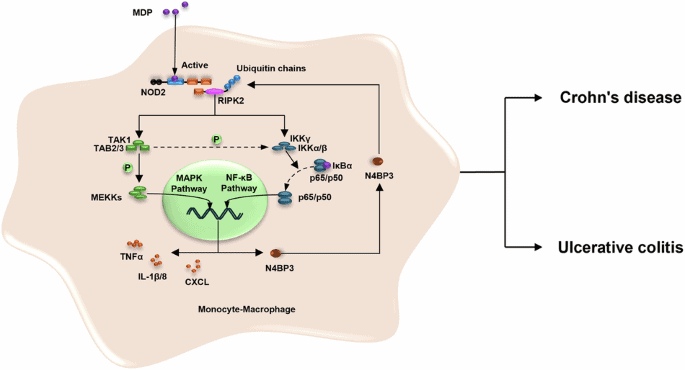
The intracellular receptor NOD2 is one of the most important genetic susceptibility factors for Crohn’s disease. NOD2 recognizes bacterial peptidoglycan fragments and regulates both immune defense and immune tolerance.
NOD2 signaling contributes to:
- Antimicrobial peptide production
- Cytokine secretion
- ROS generation
- Bacterial killing
- Regulation of adaptive immunity
Importantly, NOD2 also limits excessive inflammatory signaling during chronic microbial stimulation, thereby preventing uncontrolled immune activation.
Loss-of-function NOD2 mutations impair both microbial defense and immune regulation, significantly increasing susceptibility to Crohn’s disease.
Host–Microbiota Cross Talk in Intestinal Disease
Microbial Regulation of Immune Development
Intestinal microbiota play a fundamental role in shaping immune system development and function. Germ-free animal models demonstrate profound defects in:
- Lymphoid tissue development
- IgA production
- T-cell differentiation
- Immune tolerance pathways
Specific bacterial species can selectively regulate immune polarization.
For example:
- Certain microbes promote Treg differentiation and IL-10 production
- Others stimulate Th17-mediated inflammatory responses
Microbial metabolites such as short-chain fatty acids also suppress intestinal inflammation and contribute to epithelial barrier maintenance.
Dysbiosis and Inflammatory Bowel Disease
Alterations in intestinal microbial composition, known as dysbiosis, are strongly associated with inflammatory bowel disease.
Patients with IBD frequently exhibit:
- Reduced microbial diversity
- Altered Firmicutes and Bacteroidetes populations
- Increased colonization by adherent-invasive Escherichia coli
- Reduced beneficial anti-inflammatory bacteria
Environmental factors contributing to dysbiosis include:
- Antibiotic exposure
- Dietary changes
- Hygiene-related microbial depletion
- Loss of helminth exposure
These microbial alterations can disrupt immune homeostasis and promote chronic intestinal inflammation.
Balance Between Immune Defense and Tolerance
Intestinal immune homeostasis depends on a precise balance between:
- Antimicrobial defense
- Immune tolerance
- Epithelial barrier integrity
- Controlled inflammatory signaling
- Microbial regulation
Disruption of this balance through genetic susceptibility, microbial dysbiosis, epithelial dysfunction, or immune dysregulation contributes directly to the pathogenesis of inflammatory bowel disease.
Understanding the molecular interactions between host immunity and intestinal microbiota is essential for developing next-generation therapies targeting:
- Microbial composition
- Cytokine signaling
- Barrier integrity
- Immune tolerance pathways
- Innate immune signaling
Advances in microbiome research, immunology, and molecular medicine continue to improve our understanding of intestinal immune regulation and provide promising therapeutic opportunities for patients with IBD.